 Rayo PDF GO
How to Send Confidential Documents as a PDF Securely
Emailing a contract, a medical record, a scanned ID, or a financial statement without a second thought is one of the most common ways information gets leaked. The good news is that a few simple habits can cut the risk a lot. In this guide you'll see how to prepare the PDF before sending it, how to protect it with Rayo PDF GO without uploading it to any server, which channel to use, and what to do when the document has already gone out and you regret it.
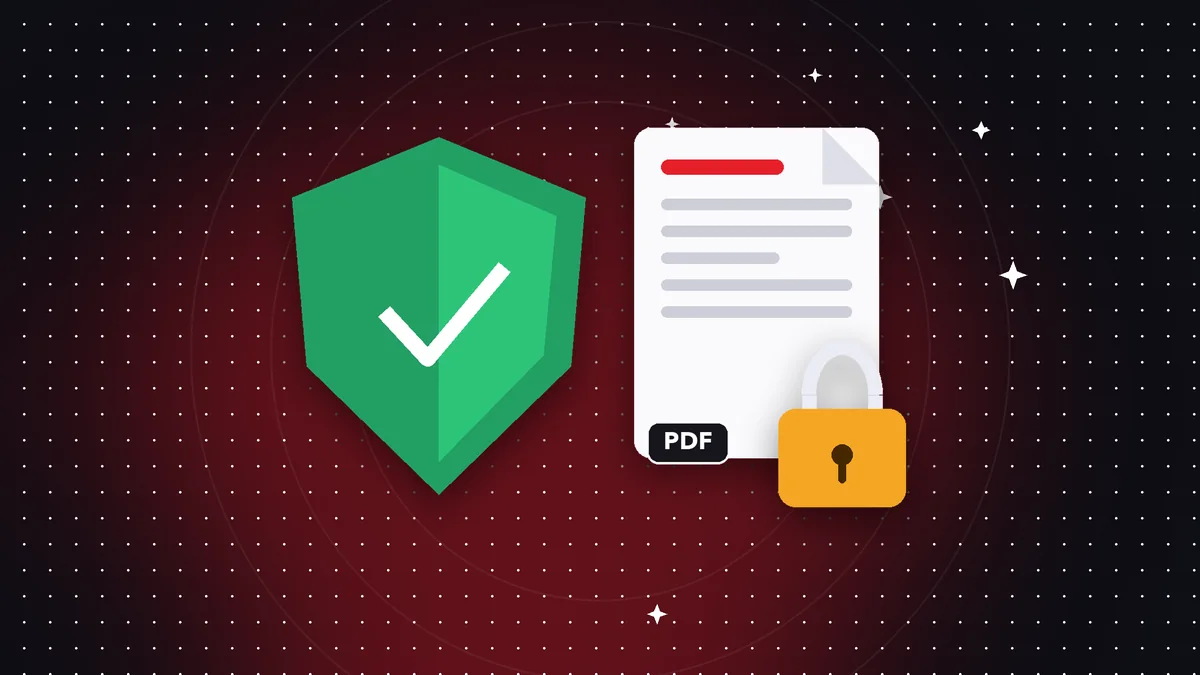
Try it now: Protect PDF
Choose your file and continue in the app. It is processed on your device, never uploaded to a server.
What "confidential" means and why it leaks
A document is confidential when its content should only be known to a small group of people: identity data, medical information, contracts with private clauses, payroll, bank statements, business proposals, or test results. A leak can mean anything from annoyance to fraud or problems at work.
They almost never leak because of a sophisticated attack. The usual causes are an email sent to the wrong address, a file forwarded to more people than intended, a folder shared with the wrong permission, or a PDF that included a page with data nobody remembered.
That's why document security starts before you send: deciding what to send, to whom, and how matters as much as any tool. Tools help, but the judgment of the person sending is the first line of defense.
Step 1: review and clean the content before sending
Open the PDF and go through it page by page as if you were the recipient. Ask yourself whether they need to see all of it. If the document has extra pages, remove them with the Delete pages tool; if they only need part of it, extract those pages into a new file with Split PDF.
If there is data on the pages that shouldn't be visible, such as an account number, an ID number, or an address, don't cover it with a black rectangle drawn on top: the text underneath still exists and can be copied. Use Redact PDF, which applies a permanent redaction, and check the result before moving on.
Finally, check annotations, comments, and form fields. Sometimes a PDF carries internal notes or answers you didn't intend to share. Flattening it merges those elements into the content, and checking the result avoids surprises.
An everyday example: you're about to send your employment certificate to a bank. Before sending it, check whether the PDF includes other employees' data or internal notes; if so, extract only your page. If the institution offers a secure portal for uploading documents, use it instead of email, because it usually keeps a record and limits who can see the file.
Step 2: password-protect the file in Rayo PDF GO
1) Go to Rayo PDF GO at rayopdfgo.com/app (with your free account) or use the app on your phone or computer, and open Protect PDF. This feature requires the Premium plan.
2) Choose the file you've already reviewed, type a long, unique password (a phrase of several words works very well), and confirm it. Apply the protection and download the new PDF. The process happens on your device and the file is never uploaded to any server.
3) Open the protected version to check that it asks for the password and that everything displays correctly. Keep the unprotected original somewhere safe, because if you forget the password you won't be able to recover the content easily.
Step 3: choose the channel and share the password separately
Sending the PDF and the password in the same message cancels out almost all the benefit. Send the file by email or through whatever platform you use, and share the password another way: a phone call, a message in a different app, or, even better, in person when possible.
Double-check the recipient's address before you hit send. Email autocomplete is a very frequent source of mistakes, especially with similar names. If the document is very sensitive, type the full address by hand.
Ask for confirmation of receipt and, when appropriate, state in writing what you expect the recipient to do with the file: not forward it, delete it after use, or open it only on a trusted computer. It doesn't prevent misuse, but it makes expectations clear.
When you work with clients, it's worth agreeing from the start on how sensitive documents will be exchanged: which format, which channel, and who holds the password. Writing that rule into the contract or a welcome email avoids improvising under pressure and shows that both sides understood the procedure.
What to do if you're using your phone or a shared computer
If you're sending from your phone, try to do it over a trusted connection and not from an unprotected public Wi-Fi network. The Rayo PDF GO apps work without uploading the file, but the later email or messaging still depends on your connection.
On a shared computer, such as one at an internet cafe or the office, download only what's essential and afterward delete the files from the downloads folder and the trash. Sign out of all accounts and don't save passwords in the browser.
If you need to scan documents with your phone before sending them, do it with Scan to PDF and save the result in a folder you control. Avoid leaving photos of IDs or contracts in your gallery, where they may sync to services you don't remember turning on.
Common mistakes when sending sensitive documents
Trusting that a discreet file name is enough. A PDF called "stuff.pdf" still contains everything it contains. Use descriptive names that don't include sensitive data, and avoid putting ID numbers or amounts in the file name.
Sending the full version "just in case." The more information that travels, the greater the potential damage. Sending only what the paperwork requires is the cheapest and most ignored security measure.
Forgetting metadata and history. A PDF can store details such as the author or the program used to create it. If that matters, check the file's properties before sending it. And don't forget to clean up old copies you left in downloads, sent mail, or shared folders.
Real-world cases and alternatives
A lawyer sending a power of attorney to a client can split the PDF to send only the necessary pages, protect it, and share the password by phone. A company delivering payslips can generate one file per employee instead of one big file. A patient sending test results to a doctor can redact data that isn't needed.
Other alternatives, such as private links with an expiration date or exchange platforms with permissions, are useful and can be combined with a protected PDF. If your organization requires a particular system because of internal policies or data protection regulations, follow those rules first.
Keep in mind that a password doesn't guarantee absolute security or legal compliance on its own. It's a reasonable barrier that makes unauthorized access harder. For regulated cases, such as health data or financial information subject to regulation, consult your organization's legal or security team.
Final checklist before you hit send
Go through these questions every time, especially when you're in a hurry: Is this the correct, final version? Does it contain only what the recipient needs? Did I permanently redact the data that shouldn't be seen, and check that the hidden text can't be copied? Does the file have a password, and did I store it somewhere safe?
Then move on to the recipient: Is the address exact? Is this the right person and not someone with a similar name? Do I know which channel I'll use to give them the password, and will I let them know the file is on its way? A short message saying "a protected file is coming your way" helps spot impersonation.
Think about what happens afterward: How long will the other person need to keep it? Can I ask them to delete it when they're done? Where does my copy stay, and who else has access to it? Documenting these answers, even in a short note, saves you arguments if there's ever a leak.
With practice, this checklist takes under two minutes and becomes a reflex. It doesn't replace your company's policies or legal advice when regulated information is involved, but it significantly reduces the most common leaks, which are usually human errors and not technical attacks.
Frequently asked questions
Is it safe to email a password-protected PDF?
It's much safer than sending it unprotected, as long as the password is strong and travels through a different channel. It isn't an absolute guarantee: it also depends on who you send it to and how they handle it.
Should I send the password in the same email?
No. If someone gets into that email, they would have the file and the key together. Share it by phone call or through another messaging app.
How do I hide sensitive data before sending a PDF?
Drawing a black box on top isn't enough, because the text may still be there. Use a permanent redaction tool such as Redact PDF, available in the Rayo PDF GO Premium plan.
Does Rayo PDF GO store my confidential documents?
No. Everything is processed on your device and files are never uploaded to any server. You decide where they're saved and who they're sent to.
What do I do if I sent the document to the wrong person?
Let the recipient know right away and ask them to delete it and confirm. If it was protected and the password wasn't shared, the risk is lower; change the password and resend the correct version.
Keep reading
 GuideHow to Tell if a PDF Is Safe to Open: A Clear Guide
Warning signs of a suspicious PDF, what to check before opening an attachment, and what to do if the file is c…
Read article › GuideHow to Sign a Contract Securely from Your Phone or Computer
A guide to signing a contract as a PDF without printing: what to check before signing, how to do it in Rayo PD…
Read article › GuidePDF vs Word: Key Differences and When to Use Each Format
Compare PDF and Word: editing, formatting, file size, security, and compatibility. Find out which to choose an…
Read article ›